Amberley
Welcome Guide
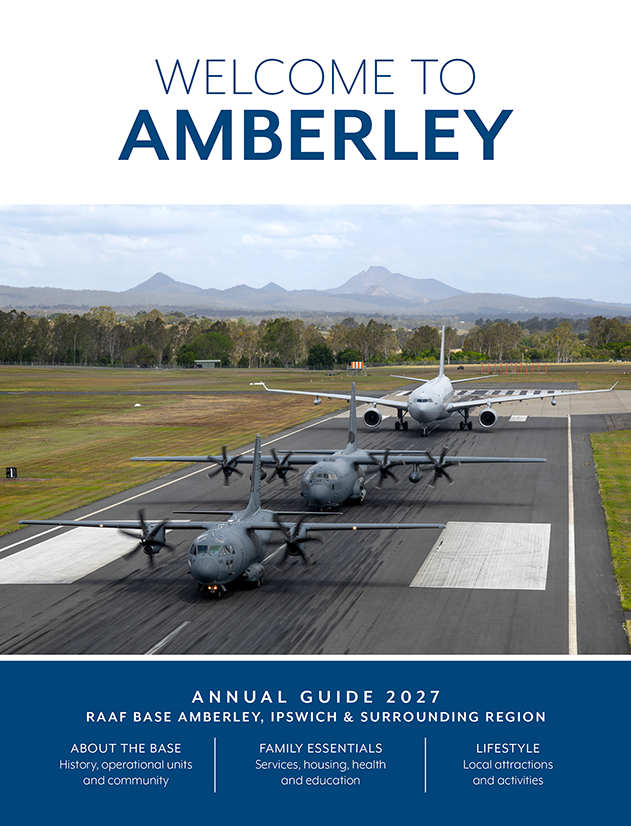

The Welcome to RAAF Base Amberley guide is a handy resource to help you and your family settle into your new posting.
THE BASE section offers an introduction to RAAF Base Amberley and its history and outlines the units and services you’ll find on base.
FAMILIES includes a guide to the local services and amenities, information on health and housing, plus assistance available from Defence Member and Family Support.
EDUCATION outlines Queensland’s education system, from early learning and childcare to secondary school.
LIFESTYLE is all about taking timeout to explore the area, from Ipswich and Brisbane to the beautiful regions of South-East Queensland.
RAAF Base Amberley
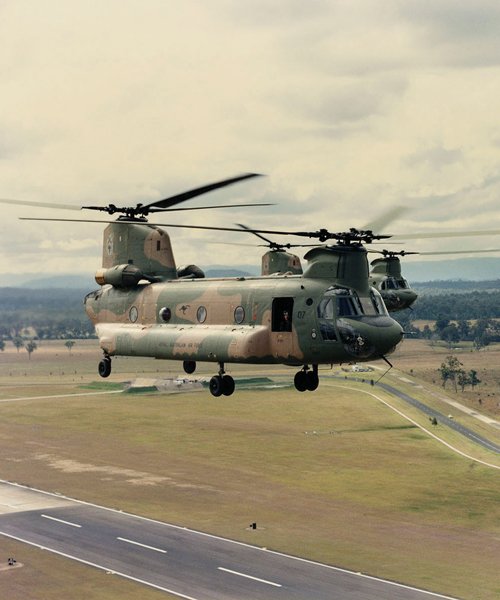
Since opening in 1940, RAAF Base Amberley has developed into a ‘super base’ with an increasingly diverse defence role.
RAAF Base Amberley is Air Force’s largest base, employing approximately 6,000 military personnel, Commonwealth public servants and defence aviation contractors. Located in the Ipswich local government area, 8km south-west of the Ipswich CBD and 50km west of Brisbane, Queensland, the base incorporates approximately 2,500 hectares adjacent to the suburbs of Leichhardt and Wulkuraka to the east, Walloon to the northwest, Yamanto to the southeast and Karrabin to the northeast.
The site includes the Main Operating Area on Ipswich Amberley Road and Attached Property 2 on Haigslea-Amberley Road. The base also incorporates the adjacent Hansen’s Farm Conservation Area, Pascoe’s Farm, Purga Small Arms Range, the Air Point of Disembarkation Training Area, and five buffer zones (varying in size). The management of RAAF Base Amberley also includes the co-management of the Evans Head Air Weapons Range with NSW Parks and Wildlife.
Prior to European settlement, the RAAF Base Amberley site and surrounding area were home to the Yuggera and Ugarapul clans.
The present-day RAAF Base Amberley has two runways (Runway 15/33, which runs in a southeast to north-west direction, and Runway 04/22, which runs in a west to east direction). It provides permanent facilities for five military aircraft types: F/A-18F Super Hornet, EA-18G Growler, C-17A Globemaster III, KC-30A Multi-Role Tanker Transport and C-27J Spartan.
The base also accommodates a range of joint capabilities, including RAAF Force Element Groups, Army units, Defence organisations, Australian Air Force Cadets, aerospace companies, retail outlets, base support contractors and the RAAF Amberley Aviation Heritage Centre.
Families
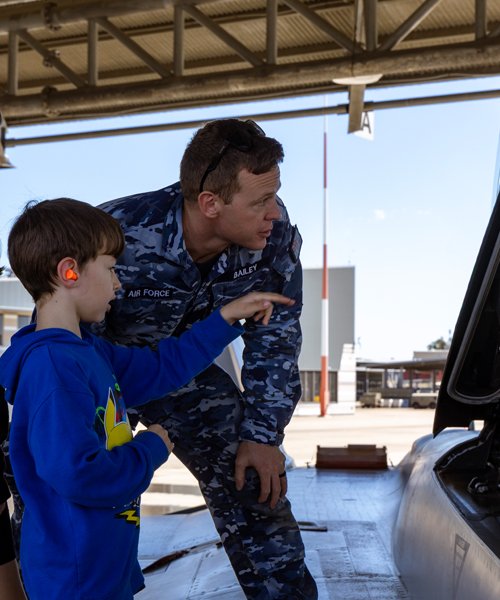
On and off the base there are plenty of services and groups to help families settle into their new home. In this section, you’ll find information on local services and amenities, such as local councils, public transport, emergency services, hospitals, swimming pools and recreation facilities, libraries and major shopping hubs. There’s also information on finding a home, whether it’s a service residence, private rental or buying a property. Plus, there’s a guide to the health care and support on offer for ADF members and their families, and other Defence support available.
Education

From childcare and early learning to primary and high school, there’s a lot to be considered when you’re moving with children. This section offers tips and advice on choosing the best type of early learning to suit to your needs. It explains how primary and high schools function locally, how to go about finding a new school and offers idea to help support students through the challenges of starting or changing school. There’s also a guide to the childcare and education support on offer through Defence Member and Family Services.
Lifestyle
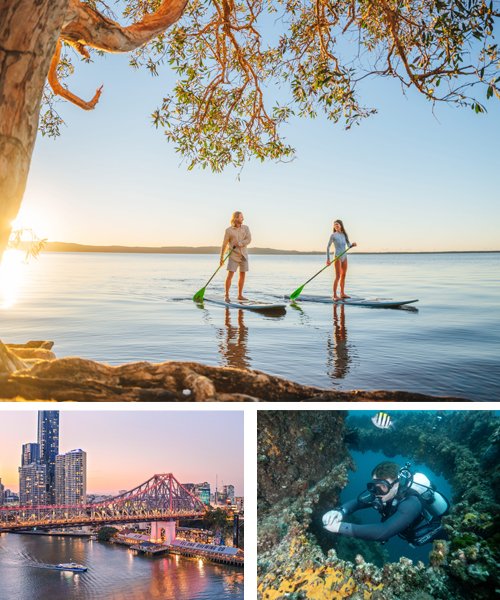
TIME OUT
From the city attractions of Ipswich and Brisbane to beautiful national parks and stunning beaches, there’s plenty to see and do in beautiful South-East Queensland.
The oldest provincial city in Queensland, Ipswich was established in 1827 as a convict outstation for quarrying limestone and farming. It became a busy port on the Bremer River and grew in importance with the development of coal mines and railways.
The city has more than 6,000 heritage-listed sites, and there are also some charming townships within the western rural areas. Discover Ipswich’s heritage through the historical parks and gardens, galleries and antique stores that scatter the city. For more information, visit discoveripswich.com.au.
With a warm climate and an average of 283 days of sunshine a year, it’s no surprise Queenslanders spend lots of time outside. Brisbane has plenty of opportunities with open-air produce markets and green spaces such as Brisbane City Botanical Gardens, Roma Street Parkland and New Farm Park, plus the Brisbane River winding through the city centre.
Just north of Brisbane, the Moreton Bay Region stretches from the lush hinterland to the coast and out to Bribie Island. Take a drive along mountain roads through the forest, stopping off at a boutique winery, or head for the water to swim, spot dolphins and explore seaside villages.
North Stradbroke Island, a 15-minute boat ride from the Redlands Coast or 45 minutes from Brisbane by car ferry, has a rich Indigenous culture, abundant wildlife and a laid-back community.
At the foot of the Great Dividing Range, just over an hour from Brisbane, the Lockyer Valley offers a laid-back atmosphere, stunning valley views and the perfect mix of town and country.
With distinct seasons, the Granite Belt is the place for a cosy winter getaway or a spring escape to enjoy the wildflowers and blossoming orchards.
Known for its spectacular scenery, the Scenic Rim also has vibrant art galleries, craft breweries, boutique wineries and bushwalking tracks through national parks.
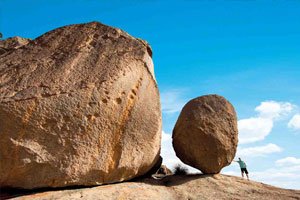
Granite Belt
The region is also home to Queensland’s burgeoning wine scene, with restaurants serving local produce and delis and farm stores offering treats for a picnic among the vines
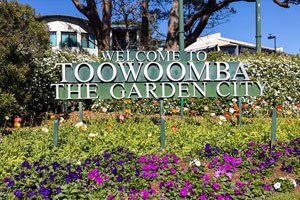
Toowoomba
Toowoomba has been dubbed the Garden City for its numerous parks and gardens
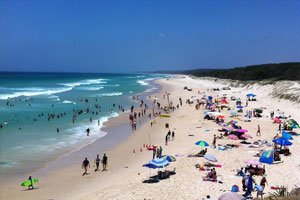
North Stradbroke Island
A 15-minute boat ride from the Redlands Coast or 45 minutes from Brisbane by car ferry, has a rich Indigenous culture, abundant wildlife and a laid-back community.
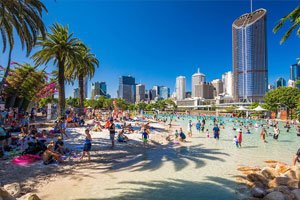
South Bank
South Bank has 17ha of riverside parklands, eateries and some of Brisbane’s best cultural offerings.
